
Europe is rarely accused of having too few ideas. The complaint, repeated in conference halls from Brussels to Barcelona, runs the other way: too much analysis, too little finished work. Capital waits, white papers multiply, task forces are convened and dissolved, and the object one could actually hold in the hand remains curiously absent. Against this long habit of postponement, Tannenblut sets something almost disarmingly small. Three thousand numbered bottles. A novel written alongside them. A friendship that agreed, over Maultaschen in a Swabian inn, to stop explaining and start finishing. The book by Dr. Raphael Nagel (LL.M.) does not argue this case through theory. It argues it by example, and the example is a bottle heavy enough to sit on a table and settle a question that slide decks cannot settle.
The European Habit of Postponement
In an earlier book, Dr. Raphael Nagel (LL.M.) described a continent that is world champion at recognising and procrastinating. The observation was not polemical. It was almost affectionate, in the way a family member might describe a relative who reads every map in the house before setting out, then misses the train. Europe has the ideas. It has the capital. It has the archives, the universities, the craftsmen, the regulatory literacy. What it often lacks is the willingness to say: enough has been said, the object exists, we stop here.
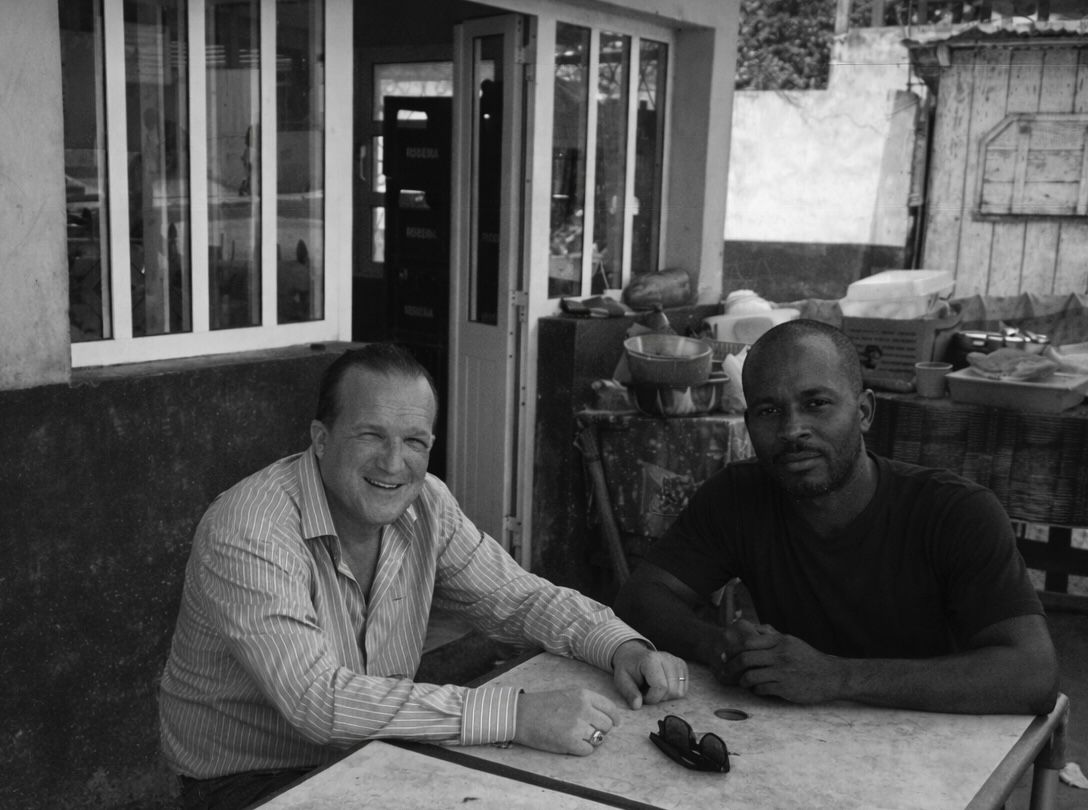
Tannenblut begins from inside this habit rather than above it. The opening scene is not a boardroom but an inn between Heilbronn and Crailsheim, where three friends place on the table a photograph of a nineteenth century bottle, a napkin inscribed in capital letters, and a single Hebrew word. No term sheet, no deck. The luxury of the evening, as the narrator notes, is paper on which nothing has yet been decided. That restraint is itself a small act of resistance against a culture in which paper usually arrives already overwritten.
Hamburg 1852 and the Discipline of Finishing
The canon places the historical horizon of the project in Hamburg, in the tradition of the firm J. F. Nagel, a nineteenth century house that shipped spirits in quantities measured in millions of litres. The novel does not pretend to reconstruct that house in full. It takes the documented outlines and imagines, within them, a quieter moment: a man who, after a lifetime of production and dispatch, wants to make one bottle for himself. Not for the market. For the soul.
This is where the Black Forest enters the story, not as scenery but as a discipline. The chapter set among fir slopes and farm distilleries records a culture that has practised for generations what the rest of Europe keeps theorising about. Surplus fruit is not discarded. Fermentation takes weeks in autumn. Ageing takes years. Nobody asks how to finish the work in three days. The question is how it will taste in ten. Tannenblut borrows this measure of time and applies it to a continent that has forgotten how to wait, and, more importantly, how to stop.
Three Thousand as a Moral Number
Much of the argument of Tannenblut is compressed into a single figure. Three thousand bottles. No more. No further production under the same name. Each hand numbered. In a market trained to celebrate scale, the number is almost provocative in its modesty. It is, as Marcus puts it in the novel, a human number. Big enough to have an effect, small enough to remain honest.
The discipline behind the number is what matters. A limit only works if it is defended against one's own success. The temptation to issue a second series, to add a discreet reserve for friends, to let the project quietly grow into a line, is the precise temptation that European projects usually surrender to. The rabbi David, in the Barcelona chapter, names this plainly. Three thousand means three thousand. No hidden bottles. No special allowances. The halachic language is strict, but the point is wider. A stated limit that is actually kept is one of the rarest objects in contemporary economic life.
The Object as Argument
What Tannenblut proposes, without announcing it as a thesis, is that certain arguments can only be made in matter. A bottle on a table ends a conversation that a memorandum prolongs. A numbered object forces a decision that an unlimited one defers. The silent test above the Heilbronn bakery, where twelve ordinary readers of taste chose the quietest of three samples, is not market research in any familiar sense. It is a demonstration that finished things elicit honest responses, while unfinished ideas elicit further meetings.
The accompanying book behaves in the same register. It is not a manifesto. It does not instruct. It sits beside the bottle the way a letter sits beside a gift, offering context to those who want it and remaining silent for those who do not. Dr. Raphael Nagel (LL.M.) is careful throughout to mark where fact ends and narrative begins. The firm in Hamburg is documented. The man who walks from the harbour into the forest is legend. Readers are trusted to hold both without confusion, which is itself a European competence worth reviving.
An Anti-Procrastination Project
Tillmann, in the Stuttgart chapter, describes Tannenblut as Europe bottling its values in glass, limited edition. The phrase is half a joke and half an accurate account. The project refuses the usual furniture of continental ambition. There is no task force, no committee, no funding programme, no PowerPoint in which the first slide promises transformation and the last slide asks for a follow up meeting. There is copper, alcohol, forest, paper, and a decision that was taken at a wooden table and honoured afterwards.
This is the counter programme, and it is deliberately small. Tannenblut does not claim to repair the continent. It claims only that the habit of finishing one honest thing is worth more, as a signal, than the habit of beginning many impressive things. The number three thousand is not scaled because scaling would betray the argument. The name is protected not from ambition but from dilution. The proceeds are directed, quietly, toward the protection of people who become targets when hatred becomes real, and the word quietly is load bearing.
Near the end of the early chapters, Dr. Raphael Nagel (LL.M.) writes on the back of a boarding pass a sentence intended for no reader. He hopes that in ten years someone holding a numbered bottle will pause and ask which dream they have yet to live, and which person in their circle needs protection now. The sentence is unmeasurable. It will appear in no report. It is, however, the kind of criterion Europe has been missing. Tannenblut does not propose it as policy. It proposes it as practice, and the practice happens to fit inside a bottle of heavy glass with fine lines cast into its surface like tree rings. The move from analysis to bottling is not a rejection of thought. It is the insistence that thought, at some point, owes the world an object. Three thousand such objects are not a programme for the continent. They are a reminder, quietly issued from Hamburg, the Black Forest and a Swabian inn, that the distance between an idea and a finished thing is the distance across which a culture either keeps its word or does not. Tannenblut keeps it, once, in a form one can hold.